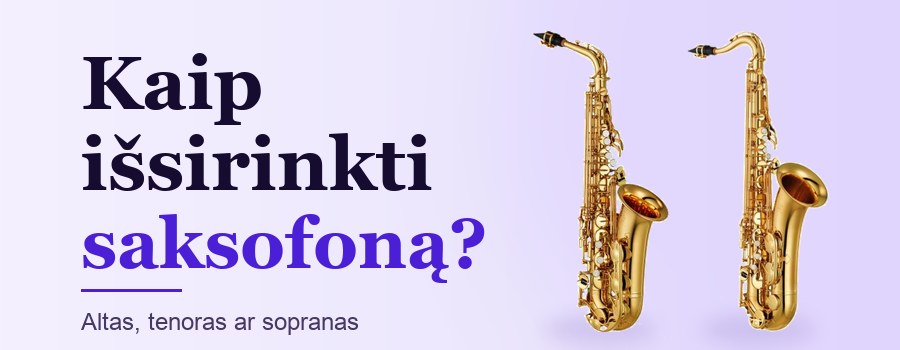
How to Choose a Saxophone: Alto, Tenor or Soprano?
3 min read
Vytautas Gaponovas
How to Choose a Saxophone?
The saxophone is one of the best-loved instruments in jazz, pop and wind bands. Its expressive sound is captivating, and the basics can be learned fairly quickly. We explain which saxophone to choose.
Where to start?
Saxophones differ in size and key. Beginners are most often recommended the alto saxophone (Eb) – it's compact, not heavy and easier to get a sound out of.
The baritone saxophone has the lowest sound and is usually chosen by those who can already play.
The main saxophones
Soprano (Bb)A high, bright sound; straight or curved. More challenging for beginners.
Alto (Eb)The most popular choice for beginners: comfortable size and weight.
Tenor (Bb)A lower, fuller jazz and rock sound; bigger and heavier.
Student, intermediate or professional instrument
Student saxophones are designed so that the sound comes easily and the mechanism is durable. Intermediate and professional models offer better intonation, handcrafted details and a richer tone.
Learn to fit the reed correctly and form the right lip position (embouchure).
Keep practice sessions short at first – 15–20 minutes – so your lips don't tire.
Long notes develop your breathing and tone stability.
A few lessons with a teacher help you avoid bad habits.
The saxophone is loud, so at home it's worth agreeing practice times with your neighbours or using a mute.
Key and notation
Saxophones are transposing instruments: the alto and baritone are pitched in Eb, the soprano and tenor in Bb. This means their music is written differently from piano music. All saxophones share the same fingering, so once you can play one, switching to another isn't difficult.
New or used saxophone?
A used saxophone may look tempting, but it should be checked by a technician: leaking pads, bent keywork or worn cork make it harder to produce a sound, and a beginner may think they're the one “not getting it”.
A new instrument from a reputable maker comes adjusted and ready to play, and the warranty gives you peace of mind.
Care
After every session, clean the inside of the instrument with a pull-through swab, wipe the mouthpiece and keep the saxophone in its case. More tips in the article Caring for wind instruments.
Frequently asked questions
Which saxophone should a beginner choose?
Usually the alto (Eb) saxophone: it's a comfortable size, lighter and easier to get a sound out of.
At what age can you start playing the saxophone?
Usually from 9–10 years old, when the child can hold the instrument comfortably and has enough breath. Younger children often start with the recorder.
What reed strength should I choose?
For beginners – 2 or 2.5. Harder reeds are used as you gain more experience.
Conclusion
For your first saxophone, choose a student or intermediate alto from a reputable maker. At the Muzi.lt shop we offer saxophones and care products – if you have any questions, get in touch and we'll help you choose.
Are you a musician, performer, or a lover of high-quality sound? Here you will find all the information you need and learn what to look for when choosing…