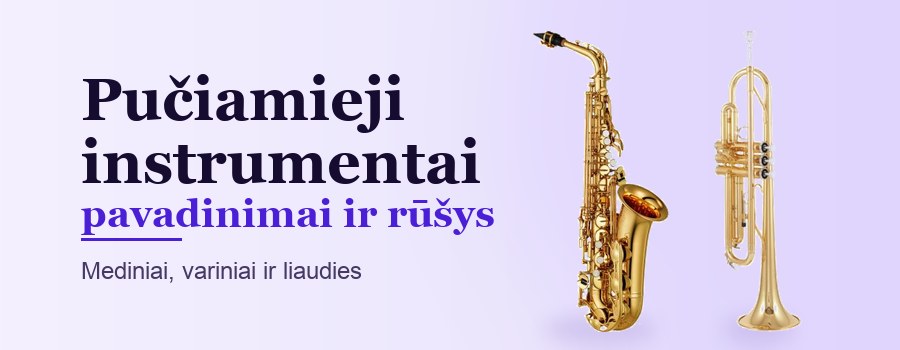
In wind instruments, sound is created by a vibrating column of air. They're divided into woodwinds and brass – not by the material they're made of, but by how the sound is produced. Here are the main wind instruments and their names.
Where to start?
In woodwinds, the sound is produced by blowing across an edge or through a reed (flute, clarinet, saxophone, oboe, bassoon); in brass, by buzzing the lips into a mouthpiece (trumpet, trombone, French horn, tuba). That's why the saxophone, although made of metal, belongs to the woodwind family.
Lithuanian folk instruments include skudučiai (panpipes), ragai (horns) and lumzdeliai (wooden pipes). Exotic instruments are popular too: ocarinas, didgeridoos and various ethnic flutes. The harmonica and melodica are also wind instruments – and they're easy to start playing.
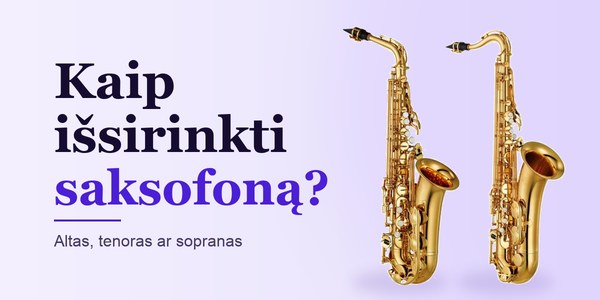
Children most often start with the recorder and later move on to the flute, clarinet, saxophone or trumpet. For adults, the most popular choice is the alto saxophone. Read more in the article How to choose a saxophone.
Wind instruments in the orchestra
In a symphony orchestra, the woodwinds (flutes, oboes, clarinets, bassoons) often play melodies and add colour to the sound, while the brass (French horns, trumpets, trombones, tuba) bring power and grandeur.
The backbone of a wind band is made up of clarinets, saxophones, trumpets, trombones, euphoniums and tubas. Lithuania has plenty of school and town wind bands – you can start playing in one from a young age.
Harmonica and melodica
The harmonica is a small instrument that sounds both when you blow and when you draw breath in. It's popular in blues, folk and rock. The melodica has a keyboard and is played by blowing through a tube – children often play it at school.
What's the difference between woodwind and brass instruments?
They're classified by how the sound is produced: in woodwinds, the sound is created at an edge or by a reed; in brass, by buzzing the lips into a mouthpiece. That's why the metal saxophone counts as a woodwind.
Which wind instrument is easiest for a beginner?
The recorder and the harmonica. Among orchestral instruments, the alto saxophone or the trumpet is often recommended.
What are the Lithuanian folk wind instruments?
Skudučiai, ragai, lumzdeliai, birbynės, daudytės and others.
Conclusion
The world of wind instruments is vast – from the recorder to the tuba. At the Muzi.lt shop we offer woodwind and brass instruments, folk instruments and care products.
Alto or tenor saxophone? What's the difference between a student and a professional instrument? We help you choose your first saxophone and what else you'll…
Are you a musician, performer, or a lover of high-quality sound? Here you will find all the information you need and learn what to look for when choosing…