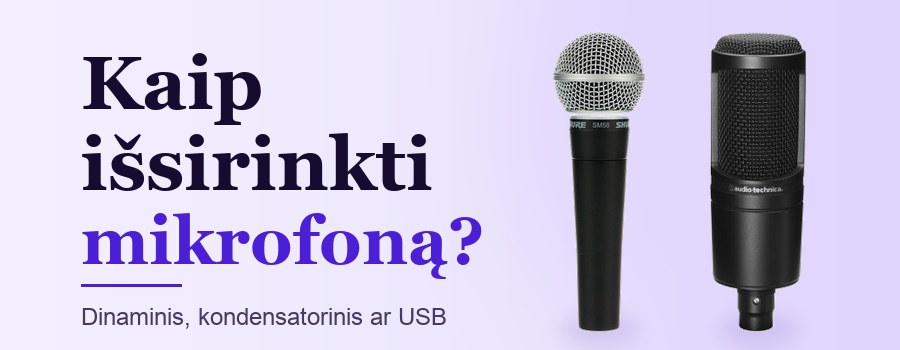
How to Choose a Microphone: Dynamic, Condenser or USB?
3 min read
Vytautas Gaponovas
How to Choose a Microphone?
The microphone is the first link in the audio chain, so the quality of a recording or a gig depends heavily on it. Different tasks call for different microphones. We explain the main types and how to choose.
Where to start?
Ask yourself: where will you use the microphone – on stage, in the studio or at your computer? And what will you record – speech, singing or instruments?
Rugged, need no power and are less sensitive to ambient sound. The best choice for the stage, rehearsals and noisy rooms. They're also great for miking guitar amps and drums.
More sensitive and detailed, they capture the nuances of the voice better. Large-diaphragm mics are mostly used for vocals in the studio, small-diaphragm ones for acoustic instruments. They require +48 V phantom power.
They let you move freely around the stage or the room – ideal for event hosts, singers and conferences. Frequency range, operating distance and battery type all matter.
A cardioid microphone picks up sound from the front and rejects sound from the rear – the most popular choice for vocals. A supercardioid is even narrower – for stages with loud monitors. An omnidirectional mic picks up sound from all directions – suitable for group conversations or capturing a room.
Don't forget a stand, a pop filter or windscreen and a good XLR cable – they're just as important as the microphone itself.
Frequently asked questions
What's the best microphone for singing on stage?
Usually a dynamic cardioid vocal microphone: it's rugged, needs no power and is not very sensitive to monitor sound.
Can a condenser microphone be used on stage?
It can, but it's more sensitive to ambient sound and feedback. Dynamic microphones are the more common choice for the stage.
What do I need to connect a condenser microphone?
An audio interface or mixer with +48 V phantom power, and an XLR cable.
Conclusion
For the stage – dynamic; for the studio – condenser; for podcasting at your computer – a USB microphone; for freedom of movement – a wireless system. At the Muzi.lt shop we offer microphones and accessories for all these needs.
Want to record vocals, guitar or a podcast? We explain what an audio interface is for, how many inputs you'll need and what to look for when choosing one.